
Most accidents involving caustic soda happen during the simplest operations, not the complicated ones: opening a bag, dissolving flakes in a drum, leaving a pallet out in the yard. This article gathers the rules that cost nothing to follow and a great deal to ignore.
Why caustic soda behaves differently
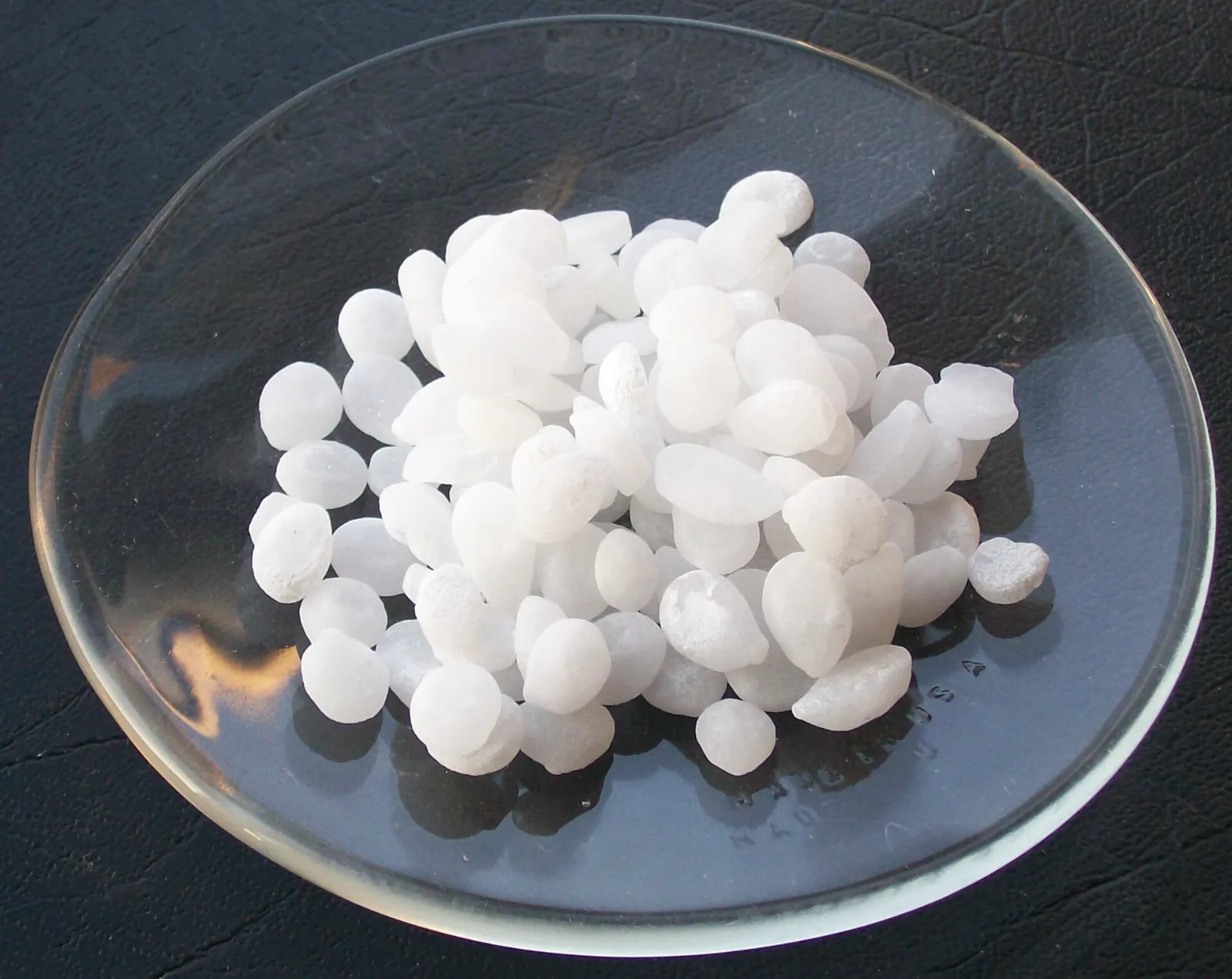
Solid sodium hydroxide has two properties that govern how it must be stored. It is hygroscopic: left in open air, the flakes draw in moisture, soften and cake together. And it reacts with carbon dioxide in the air to form sodium carbonate. Both lead to the same place — material that has sat in an open bag for weeks no longer matches the purity written on its certificate of analysis.
Hence the simplest storage rule of all: keep the bag closed until the moment of use, and either finish an opened bag within the shift or reseal it properly.
Storage conditions
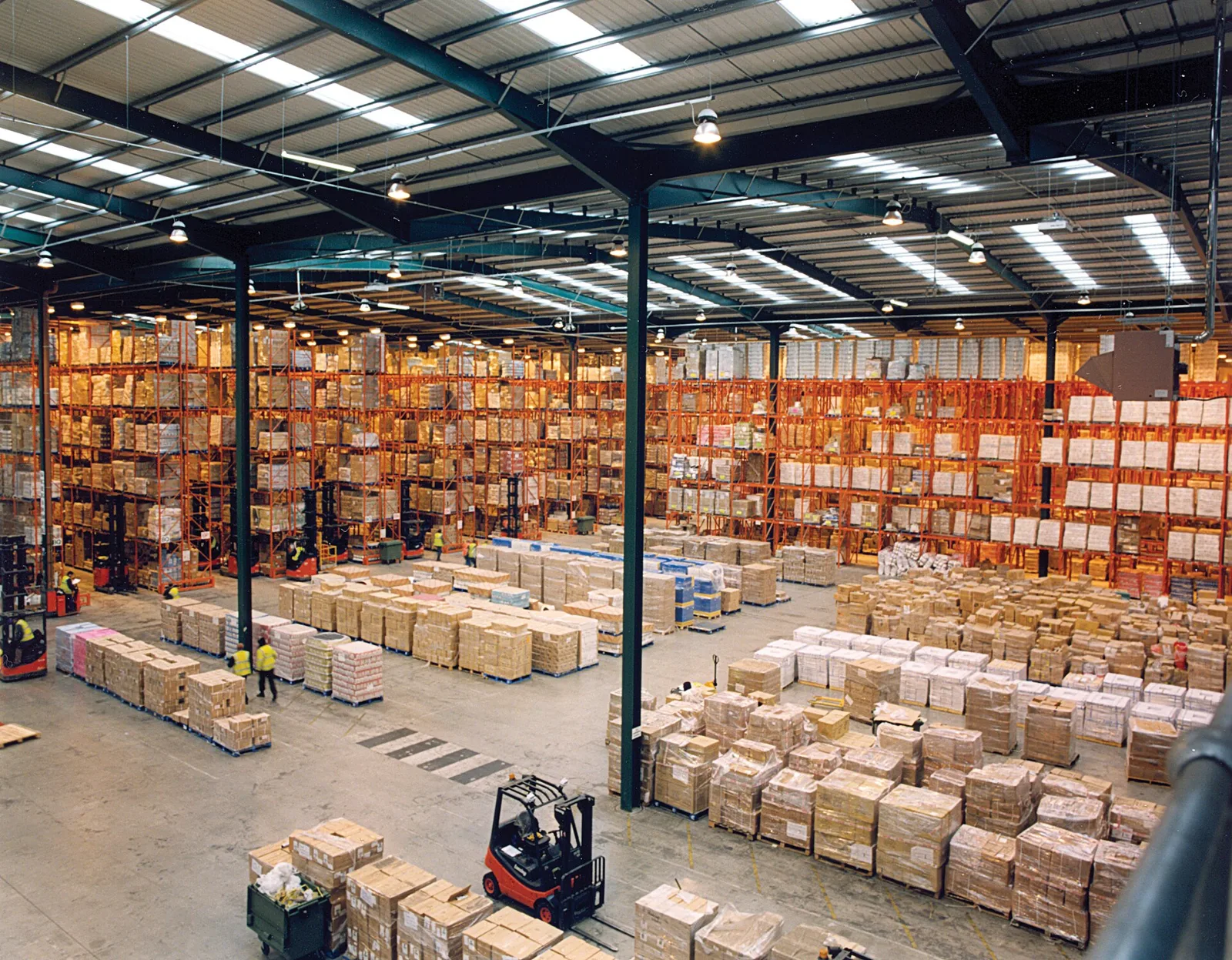
- Covered and dry. The store must have a roof and be protected from rain and ground moisture.
- On pallets, never on the floor. Moisture rises through concrete and ruins the bottom row.
- Adequate ventilation, to carry away heat and any vapour.
- Away from acids. Contact produces a violent, strongly exothermic neutralisation. The two must never share a store.
- FIFO stock rotation. The consignment that arrived first is used first.
Metals that must never touch caustic soda
This is the most important section here, and the one most often overlooked on the plant floor. Sodium hydroxide reacts with several metals and liberates hydrogen gas, which in a confined space will explode on the smallest spark:
- Aluminium — the most violent of all. No aluminium vessel, funnel, scoop or pipe should sit anywhere in the caustic path.
- Zinc and galvanised steel — the galvanised coating is zinc-based and is attacked.
- Tin, lead, brass, bronze and copper — all corrode in contact with an alkaline environment.
Suitable materials, by contrast, are polyethylene (HDPE and XLPE), polypropylene, fibre-reinforced plastic (FRP), 316 stainless steel and neoprene rubber. Carbon steel may also be used for solutions up to roughly 50 per cent at low temperature, but at elevated temperature it becomes subject to caustic stress corrosion cracking and is unsuitable for hot storage.
Dissolving in water: the rule with no exceptions
Sodium hydroxide dissolves with a strongly exothermic reaction. Tip in a large quantity of flakes at once and the solution can approach boiling and throw caustic liquid out of the vessel.
- Always add caustic slowly to water, never water to caustic.
- Use cold water and stir continuously while adding.
- Cool the vessel if you can, or add in several stages.
- Do not use thin glassware; thermal shock will break it.
Personal protective equipment
Caustic soda attacks skin and, above all, eyes — and unlike acid the injury is not immediately painful. That delay is exactly what makes it dangerous, because the worker notices too late. The minimum required:
- Sealed splash goggles, with a face shield when handling solution
- Long rubber or neoprene gloves
- Chemical-resistant apron and boots
- Dust mask while emptying bags
If contact occurs
An emergency shower and eyewash must be seconds away from the work position, not at the far end of the hall. Flush the affected area with plenty of lukewarm water for at least 15 minutes, removing contaminated clothing as you go. Never use acid to neutralise caustic on skin; the heat of that reaction deepens the injury. For eye contact, keep flushing, seek medical help immediately, and take the product safety data sheet with you.
Spills
Spilt flakes should be collected dry, with a plastic scoop or a suitable industrial vacuum. Hosing them down converts a solid into a concentrated, mobile caustic liquid that is both more dangerous and on its way into the drain. Alkaline effluent must be neutralised before discharge.
Transport
Solid sodium hydroxide is classified as a corrosive substance in transport and carries its own documentation and labelling requirements. Bags must be secured on pallets so they cannot shift in transit, and the floor of the container or truck must be dry. Loading in the rain without cover effectively ruins the product before it arrives.
In short
Three principles remove most of the risk: keep the bag closed, keep aluminium out of the caustic path, and always add caustic to water rather than the reverse. Our flake caustic soda is supplied in 25 kg bags to the Iranian national standard ISIRI 364, and the certificate of analysis for each batch travels with the consignment. Contact our technical department for the safety data sheet.

Comments 0
Our technical team usually replies within one business day.