

This decision is usually made by looking at the price per tonne, and it usually comes out wrong. Flake caustic soda and 50 per cent liquid caustic are one substance in two delivery forms, and the right choice turns on three things that never appear on the invoice: haulage distance, consumption pattern, and the infrastructure you already have.
The simple arithmetic that changes everything
Fifty per cent liquid caustic means that half of what you buy and haul is water. To land one tonne of pure sodium hydroxide at your plant:
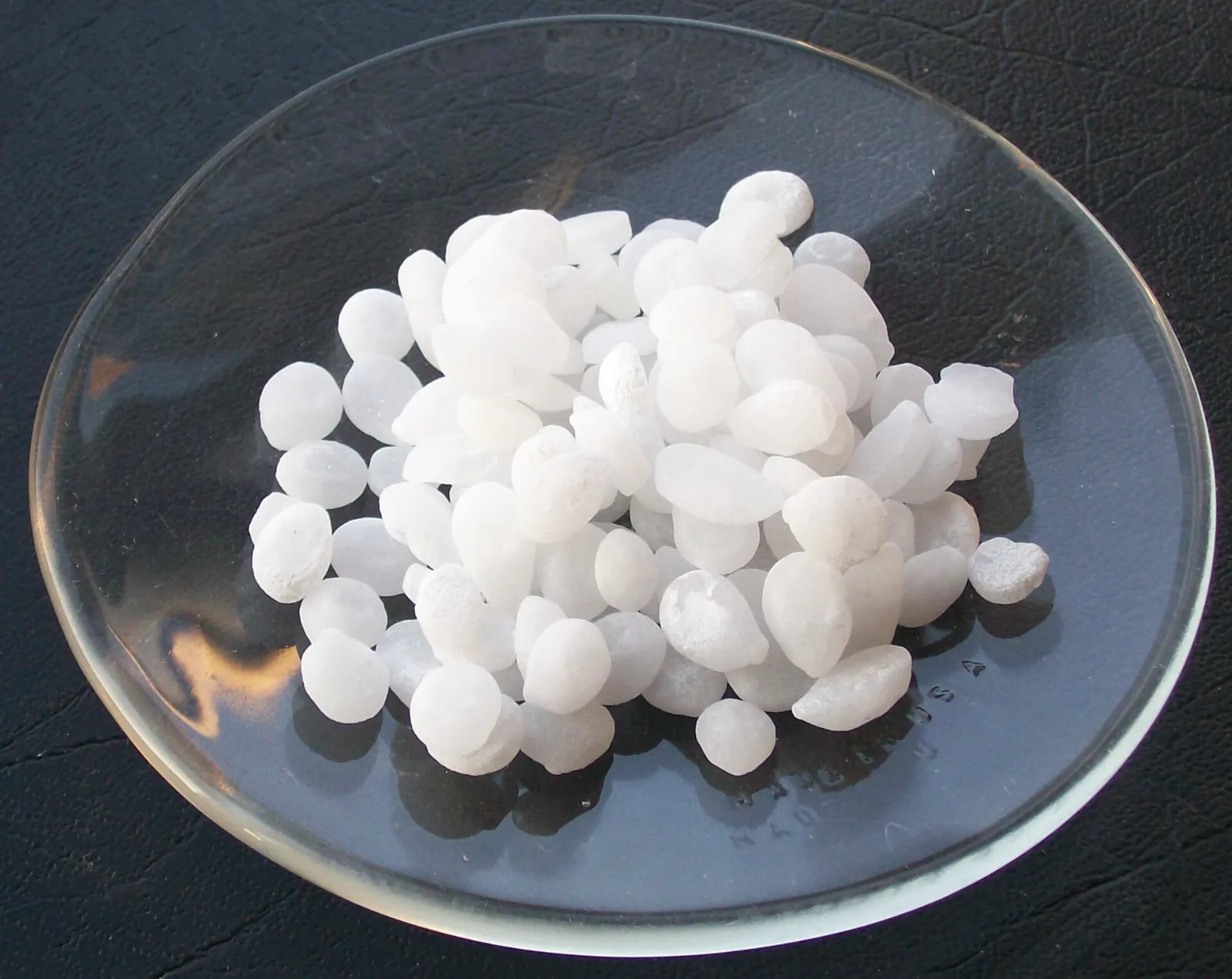
- With flake at 98 to 99 per cent, about 1.02 tonnes has to move.
- With 50 per cent liquid, 2 tonnes has to move.
You are paying roughly twice the freight per tonne of active material. Liquid looks cheaper at the loading point, but that advantage erodes quickly with distance. The common market experience is that beyond roughly a thousand kilometres of inland haulage, flake almost always lands cheaper.
The 12 °C problem
This is the point new buyers overlook, and it costs them in winter. A 50 per cent solution begins to crystallise at around 11 to 12 °C. On a cold night, the contents of the tank and the pipework set solid.
In practice, storing 50 per cent liquid caustic requires:
- A tank with heating or trace heating in cold regions
- A storage temperature typically in the 15 to 35 °C band
- Insulated lines and pump
The upper limit matters too: a polyethylene tank should generally stay below about 38 °C and a carbon steel tank below about 50 °C.
Flake has no such problem. A sealed bag keeps for months in a dry covered store with no heating at all.
Where liquid genuinely wins
- No dissolving step. Flake has to be dissolved in water; that is exothermic, takes time and takes labour. Liquid is pumped straight in.
- No dust. Emptying bags generates fine particles that are hazardous to eyes and airways.
- Easier automatic dosing. For plants with continuous, controlled consumption — effluent treatment above all — liquid with a dosing pump and pH control is far more convenient.
- Less manual handling. At high consumption, opening dozens of bags a day is a real hidden cost.
Where flake wins
- No capital outlay. A tank, pump, bunded containment and heating system cost real money. Flake needs only a dry store.
- Flexible quantity. You can buy a single pallet. Liquid means committing to at least a tanker load.
- Longer shelf life. A sealed bag keeps for a long time without loss of quality.
- Suited to intermittent use. If your consumption is seasonal or irregular, liquid sits in the tank absorbing carbon dioxide and weakening.
- Suited to remote sites. Where a tanker cannot easily reach you, or the road will not take one.
How to decide
Four questions settle it almost every time:
- How far is the supplier? The further away, the more sense flake makes.
- Is consumption continuous or intermittent? Continuous and high suits liquid; intermittent suits flake.
- Do you have a tank and pump? If not, count the setup cost, not just the material price.
- What is the climate? In a cold region, do not forget the cost of heating the tank.
Above all, always make the comparison on the basis of cost per kilogram of pure sodium hydroxide delivered into your own plant — freight, unloading, storage and labour included. Price per tonne at origin is a misleading number.
Our flake caustic soda is supplied at 98 to 99 per cent purity in 25 kg bags. If you are weighing the two forms against each other, our technical specialists can work through the calculation with you for your consumption pattern and distance.

Comments 0
Our technical team usually replies within one business day.